
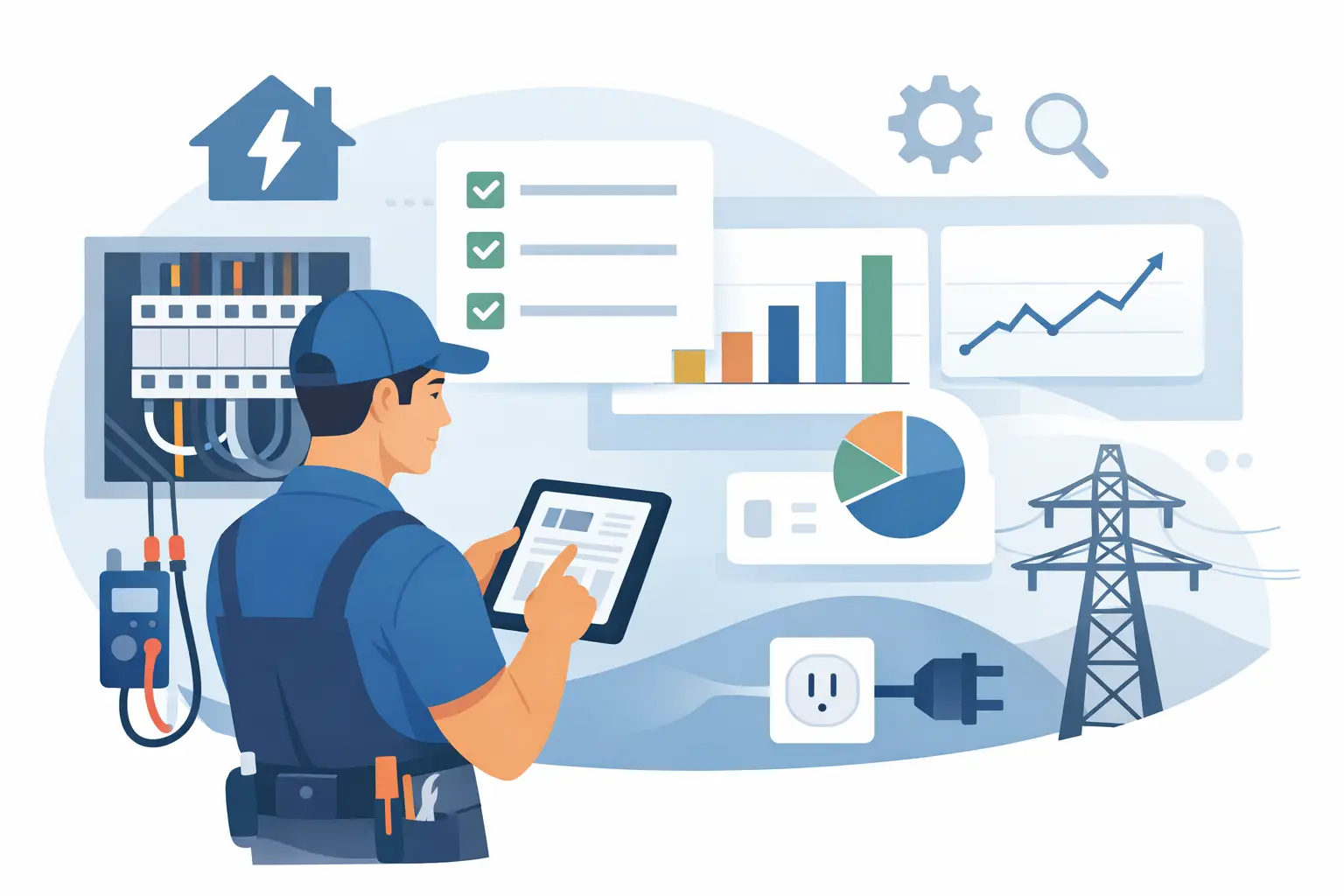
When an engineer finishes an EICR or periodic inspection, the real pressure often starts after they leave site. Notes need checking, observations need coding correctly, certificates need issuing quickly, and the office needs a clear audit trail if a client, insurer or regulator asks questions later. That is where electrical inspection reporting software stops being an admin tool and starts becoming part of your compliance operation.
For UK inspection firms, the issue is rarely just writing a report. It is controlling the full process around electrical testing and inspection - from asset identification and engineer workflow to defect recording, certificate output and evidence retention. If your current setup still relies on handwritten notes, generic forms, disconnected spreadsheets and manual certificate production, the cost shows up everywhere: slower turnaround, inconsistent reporting, missed remedials, and more time spent proving what happened on site.
What electrical inspection reporting software should actually solve
A lot of systems promise digital forms. That is not the same as solving reporting. For electrical contractors and inspection businesses, reporting sits inside a wider operational chain. The software needs to support the job before the engineer arrives, guide the inspection while they are on site, and produce usable records once the work is complete.
At a minimum, that means linking the inspection record to the right client, site, distribution board, circuit or asset. It means structuring outcomes consistently, so one engineer is not describing a C2 one way while another writes a paragraph that the office has to reinterpret. It also means building certificates and reports from captured data, rather than asking admins to retype field notes into a final document.
This matters most for firms handling repeat inspections across estates, landlords, commercial portfolios, public sector contracts or multi-site facilities. At that scale, the reporting problem is not one report. It is volume, consistency and traceability.
Why generic forms software usually falls short
Electrical inspections are governed by technical standards and practical reporting rules. Engineers are not just filling in blanks. They are recording observations, test results, limitations, classifications and recommendations that need to stand up technically and commercially.
Generic forms software may capture text, signatures and photos, but it often lacks the structure that electrical work requires. There may be no discipline-specific templates, no controlled defect catalogues, no proper asset hierarchy, and no clean route from site data to client-ready certification. The result is a digital version of the same old mess - slightly faster data capture, but the same manual checking and inconsistent outputs.
There is also the audit question. If a client challenges a finding six months later, can you show who completed the inspection, when it was done, what evidence was recorded, whether the engineer was on site, and what amendments were made afterwards? If not, the software may be storing data, but it is not protecting the business.
The key capabilities that make a difference
The strongest electrical inspection reporting software is built around operational control, not just form completion. In practice, that starts with standardised templates for electrical inspections and certificates. Engineers should be working from pre-configured workflows that reflect the type of inspection being carried out, with clear fields for test data, coded observations and supporting evidence.
Mobile usability matters just as much. Field teams need to complete inspections on mobile phones or tablets without fighting the software, and offline capability is often essential in plant rooms, risers, basements and remote sites. If engineers have to save notes elsewhere and upload them later, you have already reintroduced risk.
Asset and site structure are equally important. Electrical reporting becomes difficult when every job starts from a blank page. A proper system should hold site records, asset registers and inspection histories so engineers can work against known equipment and prior results. That reduces duplication and gives the office a clearer view of recurring issues, overdue actions and asset condition over time.
Certificate generation is another dividing line. If the office still has to compile reports manually, the job is only half digitised. Good software turns captured field data into consistent, branded, professional outputs with minimal intervention. That speeds turnaround and reduces the chance of transcription errors.
Then there is evidence. Photos, signatures, timestamps, defect records and job status history should all sit inside the same record. Audit-ready by default is not a slogan. It is the difference between being able to defend your process and hoping nobody asks awkward questions.
Electrical inspection reporting software and compliance risk
Electrical work carries obvious safety implications, but for inspection firms the commercial risk is just as real. Reporting errors can trigger disputes, delayed payment, failed audits or reputational damage. A missed observation or poorly documented limitation can become a contractual problem very quickly.
That is why software choice should be treated as a compliance decision, not just an IT purchase. The right platform helps standardise how engineers report findings, reduces variation between teams, and keeps the evidence chain intact from site visit to certificate issue. It also gives managers visibility. They can see which jobs are complete, which reports are awaiting review, and where bottlenecks are forming.
There is a trade-off, though. More control can mean more structure, and some engineers initially resist highly standardised workflows. That is understandable. Experienced inspectors do not want software getting in the way of technical judgement. The answer is not to strip out structure. It is to use a system designed around field reality, where templates support engineers without forcing clumsy workarounds.
What to ask before you choose a platform
If you are assessing electrical inspection reporting software, start with your live workflow rather than a feature checklist. How is an inspection booked? How is the site identified? How are assets selected? How are defects coded? Who reviews the report? How is the certificate issued? How is remedial work tracked? If the software only covers one or two of those stages, expect admin gaps to remain.
You should also look closely at how the system handles repeat work. Many firms win long-term contracts because they can manage recurring inspections reliably across large property portfolios. That requires scheduling discipline, consistent site data and a clear way to carry forward relevant records without carrying forward old mistakes.
Reporting flexibility matters too. Some businesses need highly structured outputs for standard inspection regimes. Others need room for bespoke client requirements, additional observations or specific branding. Too much rigidity creates friction. Too much flexibility creates inconsistency. The right balance depends on your mix of domestic, commercial, industrial or multi-discipline work.
Finally, consider implementation effort. A platform may look strong in a demo but fail if onboarding is slow or template setup becomes a consultancy project. Inspection firms need software that can be configured quickly, adopted by engineers and rolled into daily use without months of disruption.
Where operational gains usually appear first
Most firms see the first improvement in turnaround time. Engineers complete more on site, the office spends less time deciphering notes, and certificates go out faster. That alone can improve cash flow where invoicing depends on report completion.
The second gain is consistency. Standard templates and defect structures reduce report variation between engineers, which improves quality control and makes client communication easier. Operations teams spend less time correcting language, reformatting outputs or chasing missing details.
The third gain is visibility. Once reporting, scheduling, assets and evidence sit in one place, managers can see work in progress without relying on phone calls, inbox searches and spreadsheets. That makes it easier to spot overdue inspections, allocate workload and maintain service levels.
For firms working across multiple compliance disciplines, the benefit can be bigger again. Running electrical reporting in one system and every other inspection process elsewhere usually creates duplicate records and fragmented admin. A unified platform is often the cleaner long-term decision, especially if your teams already cover fire, petrol, HVAC, water hygiene or broader statutory inspection work. That is where a specialist platform such as CertFlow becomes commercially useful - not because it digitises a single report, but because it connects electrical reporting to the rest of the operating model.
The software should support the engineer, not slow them down
There is no shortage of software marketed at compliance businesses. The real test is whether it helps engineers record accurate information quickly while giving the office confidence in the output. If it does that, reporting becomes faster, cleaner and easier to defend. If it does not, you simply move the paperwork problem onto a screen.
For UK inspection firms, electrical inspection reporting software is at its best when it combines technical structure, mobile practicality and audit-ready recordkeeping in one workflow. That is what turns reporting from a weak point into a control point. And when your business depends on proving what was inspected, what was found and what happened next, that control is worth far more than a digital form.