
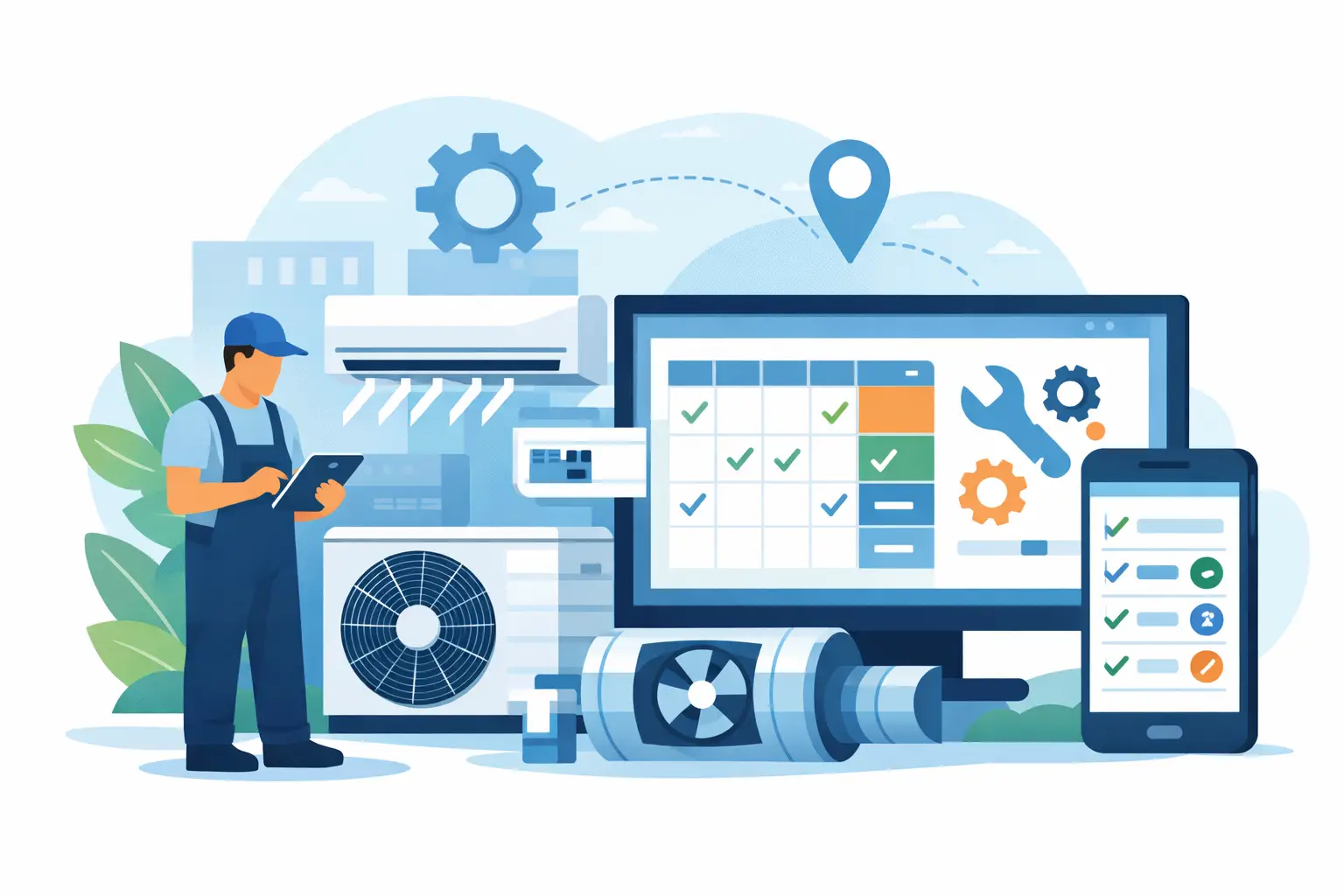
When an HVAC inspection cycle slips, the problem rarely starts in the plant room. It starts in the office - with a spreadsheet no one updated, a service interval buried in email, or an engineer turning up without the right asset history. HVAC maintenance scheduling software exists to stop that chain reaction.
For UK inspection firms and compliance service providers, scheduling is not just about filling diaries. It is about controlling recurring statutory and planned maintenance work across large asset estates, keeping engineers productive in the field, and producing records that stand up during client reviews or regulatory scrutiny. If your operation still relies on separate tools for planning, site records, certificates and invoicing, the scheduling issue is usually bigger than the calendar.
What HVAC maintenance scheduling software should actually solve
A lot of software in this category is marketed as a diary with extra features. That is not enough for inspection-led businesses. In practice, HVAC maintenance scheduling software needs to manage the relationship between assets, service intervals, engineer allocation, site access, defects, follow-on works and documentary evidence.
That matters because HVAC work is rarely a single one-off visit. You may be handling planned preventative maintenance, statutory inspections, remedial actions, filter changes, pressure checks, petrol-related safety activity, ventilation verification or TM44-related workflows depending on the contract and building type. The schedule needs to reflect those real service patterns, not just create a repeating appointment.
For operations teams, the key test is simple. Can the system tell you what is due, what has been completed, what was missed, what needs rebooking and what evidence exists for every visit? If not, it is a calendar, not an operational system.
Why spreadsheet scheduling breaks at scale
Spreadsheets work until volume, headcount and compliance pressure increase. Then the weak points show quickly.
Recurring HVAC contracts often involve dozens or hundreds of assets across multiple sites, each with its own frequency, access constraints and service history. Once that information is split across planners, engineer notes, PDF reports and separate asset lists, the risk is no longer administrative inconvenience. It is missed cycles, duplicated visits, inconsistent reporting and poor visibility of outstanding actions.
The commercial impact is just as serious. Admin teams spend time reconciling job sheets, chasing certificates and manually rebuilding invoice support. Engineers lose time calling the office for site information. Managers struggle to see whether the month is truly under control or just looks busy. Margins get squeezed by rework and wasted travel.
The core functions that matter most
The strongest HVAC maintenance scheduling software is built around operational control, not generic field service claims.
Asset-based scheduling is the starting point. Jobs should be tied to specific HVAC assets or systems, with clear service frequencies and site-level context. That gives your planners a live forward view of what is coming due and helps prevent contract drift.
Engineer allocation also needs more than drag-and-drop convenience. HVAC work often depends on competency, location, access permissions and the type of inspection required. A planner needs to assign the right engineer with the right information first time.
Mobile field access is equally important. Engineers should be able to view asset history, complete forms, capture photos, log defects and obtain signatures on site, even with poor signal. Offline functionality is not a nice extra when plant rooms, rooftops and remote estates are part of the day job.
Then there is documentation. A completed visit should produce structured, traceable records, not loose notes that need retyping later. If software cannot support standardised outputs and audit evidence, it simply moves the admin problem further down the chain.
HVAC maintenance scheduling software and compliance risk
Not every HVAC visit is a statutory inspection, but many are compliance-sensitive. That distinction matters.
In the UK, HVAC service delivery often intersects with broader regulatory duties around workplace safety, petrol systems, pressure equipment, air conditioning efficiency, water hygiene and documented maintenance obligations. The scheduling platform does not replace technical judgement, but it should give you a controlled framework for proving that inspections, checks and follow-up actions were planned and completed when they should have been.
This is where audit-ready recordkeeping becomes commercially valuable. Timestamps, engineer sign-off, defect logs, asset histories and client-facing certificates create a defensible record. If a client questions whether a site was serviced on time, or an auditor requests evidence, the answer should be immediate.
A weak system creates uncertainty. A strong one creates traceability.
Choosing software for inspection firms, not just service companies
There is a difference between software designed for broad maintenance teams and software that supports inspection-led compliance operations. HVAC businesses that carry out repeatable, evidence-heavy work need the second type.
General field service platforms can be useful for basic job dispatch. Where they often fall short is in discipline-specific workflow control. They may schedule the visit, but they do not always support structured inspection templates, standard defect catalogues, certificate outputs or asset-level compliance histories in a way that matches regulated service delivery.
That gap becomes obvious as you grow. What looks workable with two planners and six engineers becomes messy at twenty engineers across multiple contracts. Standardisation starts to matter more than flexibility. You need engineers following the same workflow, producing the same quality of records, with the office able to see everything in one place.
For firms operating across HVAC and adjacent disciplines such as petrol, pressure, water hygiene or general building compliance, a unified system is usually the better commercial decision. Running separate tools by service line tends to recreate the same fragmentation you were trying to fix.
What good implementation looks like
The right software will improve scheduling, but only if the underlying data and workflow are set up properly.
Start with the asset register. If assets are incomplete, duplicated or disconnected from service frequencies, your schedule will always be unreliable. Site structure also needs to be clear, especially where clients operate multi-building estates or mixed-use environments.
Next, standardise job types and outputs. Decide what constitutes a routine HVAC maintenance visit, what evidence must be captured, what triggers a remedial action and when a certificate or report is issued. Software performs best when it reflects a defined operating model rather than a collection of individual habits.
Planner workflows should then be tightened around exception handling. The real value is not only in booking the obvious work. It is in highlighting overdue jobs, failed visits, inaccessible assets, outstanding defects and contracts at risk of slipping. Good scheduling software gives managers a live operational picture, not a static plan.
Where the return on investment usually comes from
Most firms first look at HVAC maintenance scheduling software to save admin time. That saving is real, but it is only one part of the value.
The larger gains often come from higher engineer utilisation, fewer missed visits, faster certificate production and cleaner invoice support. When engineers can complete structured records on site and the office does not need to rekey information, turnaround times improve across the whole workflow.
There is also a client retention benefit. Planned maintenance contracts are easier to defend when your records are complete, professional and quickly accessible. Clients notice when reports are consistent, follow-on works are clear and inspection history is easy to retrieve. Operational discipline is part of the service you sell.
That said, not every business needs the same level of system depth. A small contractor running simple local rounds may manage with lighter functionality for a while. But once recurring compliance work, multi-site estates or audit scrutiny become central to the business, the cost of underpowered systems usually exceeds the subscription cost of a proper platform.
A practical benchmark for selecting a platform
If you are assessing options, judge them against your real workflow rather than a feature list. Can the platform manage asset-based recurring schedules? Can engineers work properly in the field? Can it produce traceable records without retyping? Can managers see what is due, done, overdue and failed without building manual reports?
Also check how well it handles adjacent compliance disciplines. HVAC scheduling rarely lives in isolation, particularly for firms delivering combined inspection services. Platforms built for UK compliance operations, including systems such as CertFlow, tend to make more sense where scheduling, inspection evidence, certificates and audit readiness all need to sit together.
The software should reduce operational friction from first booking through to final documentation. If it only improves one step while creating extra work elsewhere, it is the wrong fit.
HVAC maintenance scheduling software is worth buying when it gives you control, not just visibility. The best systems help you run a tighter operation, prove what happened on site and scale recurring work without adding the same admin problems at a larger size. That is the standard to hold any platform against.