
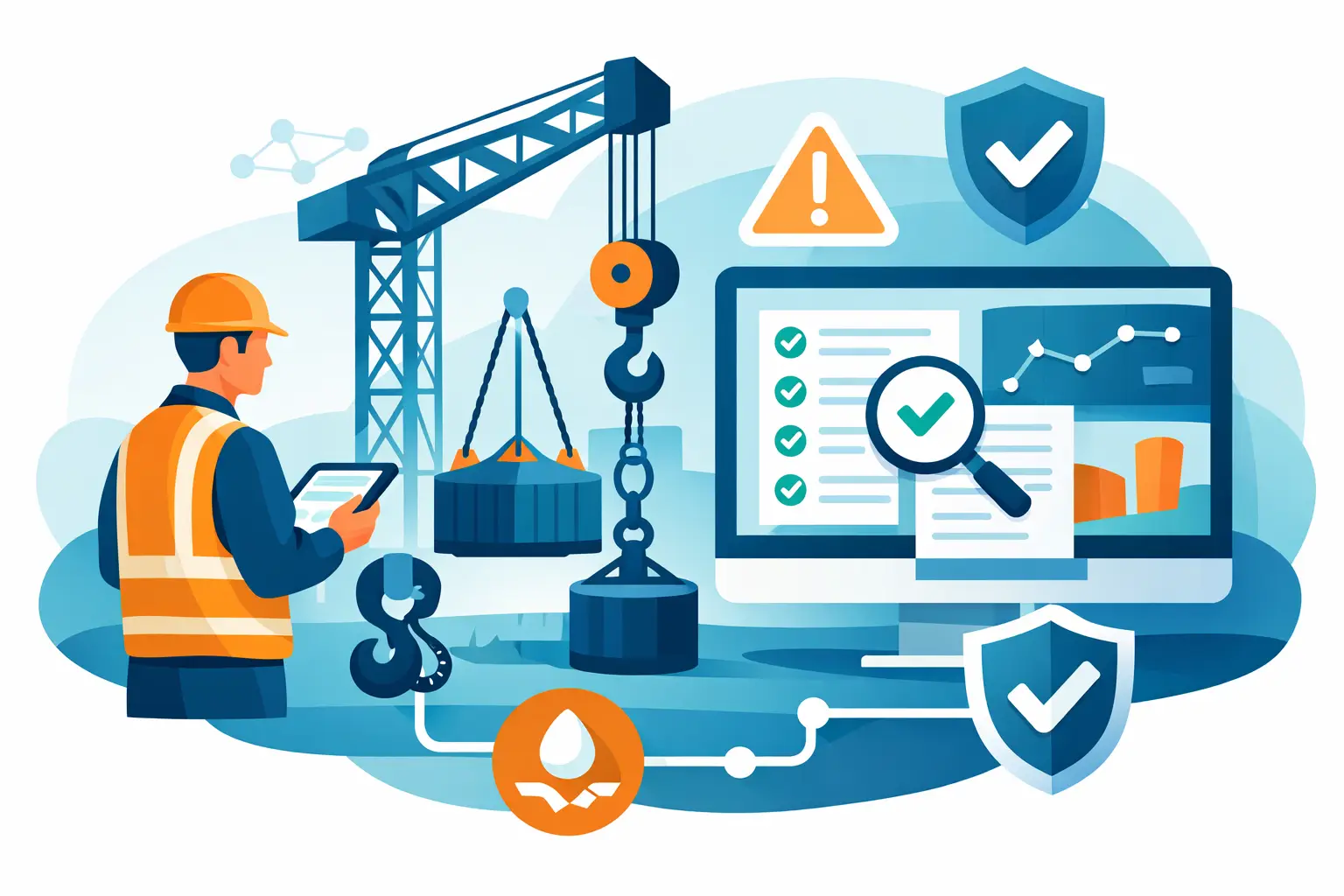
Miss one lifting accessory off a schedule, lose a paper report, or issue a certificate days late, and a routine thorough examination quickly becomes a commercial and compliance problem. That is why LOLER inspection software matters. For UK inspection firms managing lifting equipment across multiple sites, it is not just a digital form builder. It is the system that controls how assets are identified, how engineers work in the field, how evidence is captured, and how compliance is proven when a client or auditor asks questions.
What LOLER inspection software should actually do
Under the Lifting Operations and Lifting Equipment Regulations 1998, thorough examinations need to be properly planned, recorded and traceable. In practice, that means more than producing a pass or fail result. You need a reliable asset register, clear inspection intervals, defect coding that reflects actual risk, and a report output that stands up to scrutiny.
Good software brings those moving parts together. It should let an engineer see exactly what is due on site, identify each asset correctly, complete the examination against a structured template, capture photos and signatures, and generate the certificate without a second round of office rekeying. If the system cannot do that, it is not solving the real operational problem. It is just moving paperwork onto a screen.
That distinction matters for growing firms. A small team can often work around weak systems with memory, spreadsheets and extra admin hours. Once you are running multiple engineers, recurring contracts and mixed client estates, those workarounds start creating risk. Inspection quality becomes inconsistent, reporting slows down, and it gets harder to prove who did what, when, and against which asset.
Where manual LOLER workflows usually break down
Most inspection businesses do not start with a fully joined-up operating model. They inherit client asset lists in different formats, keep schedules in spreadsheets, issue reports from Word or PDF templates, and rely on engineers to manage site detail from job notes and old certificates. It works, until volume increases.
The first weak point is usually asset control. Lifting equipment data is often incomplete, duplicated or inconsistent across sites. One client calls it a goods lift, another records the same type of equipment by manufacturer model, and a third just says hoist. When naming conventions drift, the reporting becomes messy and the inspection history becomes harder to trust.
The second is field execution. If engineers are working from paper sheets or static documents, they cannot easily validate what was last inspected, what defects were raised, or whether the asset list on site still matches the system. Office teams then spend hours chasing clarifications, typing up notes and correcting avoidable errors.
The third is evidence. During an audit or dispute, firms need more than a finished certificate. They need timestamps, user actions, photographs, signatures and a clear inspection trail. Without that, proving diligence becomes slower and more expensive than it should be.
The operational case for LOLER inspection software
The real value of LOLER inspection software is standardisation. It gives every engineer the same inspection logic, the same defect framework and the same reporting output. That does not remove engineering judgement. It gives that judgement a controlled structure, which is exactly what regulated service delivery requires.
For operations managers, this means fewer unknowns. Jobs can be scheduled against due dates, site workloads can be distributed properly, and outstanding defects can be tracked without trawling through old reports. For technical managers, it means greater confidence that thorough examinations are being completed against a defined process. For directors, it means less dependence on admin-heavy workarounds that limit scale.
There is also a commercial benefit. Faster certificate turnaround improves client experience and shortens the gap between site work and invoice support. Cleaner records reduce disputes. Better visibility of due inspections improves contract retention because missed cycles become less likely. None of that changes the legal duty under LOLER, but it does change how efficiently a firm can meet it.
Key features that matter in LOLER inspection software
A useful platform starts with the asset register. Each item of lifting equipment should have a persistent record with site location, identification data, category, history and inspection frequency. If the software treats every visit as a disconnected event, you lose continuity and the long-term compliance picture becomes weak.
Mobile usability is equally important. Engineers need to complete inspections on site, often in plant rooms, warehouses, construction environments or areas with poor signal. Offline capability is not a nice extra. It is often the difference between a system that works in the field and one that gets bypassed.
Template control matters too. LOLER reports should follow your method, your terminology and your defect structure, while still being consistent across engineers. The best systems let you configure discipline-specific inspection forms, mandatory fields, observations, defect severities and certificate outputs without forcing a generic workflow onto a specialist service.
Audit evidence should be built in, not bolted on. Timestamps, signatures, engineer attribution, photo capture and change history all strengthen the record. That becomes particularly important when clients challenge findings, ask for historical evidence, or face their own insurer or regulator review.
Scheduling and reporting should sit in the same system. If due dates live in one tool and certificates in another, you create extra handoffs and more room for error. A unified workflow gives office teams a live view of upcoming work, completed inspections, failed assets and outstanding actions.
What to watch for when choosing a system
Not every product sold into inspections is suitable for LOLER work. Some platforms are effectively generic forms apps with a scheduling layer. They can capture data, but they do not reflect the realities of statutory examination workflows in the UK.
The first question is whether the software is built around compliance operations or around general field service. Those are not the same thing. A field service system may be fine for reactive maintenance, but LOLER examinations need asset traceability, formal outputs and audit-grade records. If those elements feel secondary in the product, you will end up compensating with manual admin.
The second question is how well the system handles scale and variation. Many firms deliver more than one discipline. They may inspect lifting equipment alongside PUWER items, pressure systems, local exhaust ventilation or fire assets. In that case, choosing a platform that supports only one narrow workflow may solve one problem while creating another.
The third is implementation realism. Migration matters. If a supplier cannot help structure your asset data, templates and workflows sensibly from the start, software alone will not fix poor process control. Bad data simply moves faster.
Why unified compliance software often wins
For inspection firms working across disciplines, separate tools for each service line usually create friction. Engineers need multiple apps, office teams maintain duplicate client records, and managers lose the ability to see contracts, assets and performance in one place. That is manageable at low volume, but it becomes expensive as the business grows.
A unified platform changes that. The same operating system can hold the client estate, the engineer schedule, the asset history, the certificate outputs and the audit evidence across service lines. For a business delivering LOLER alongside other statutory inspections, that gives far better control than stitching together spreadsheets, templates and niche point solutions.
This is where engineer-led software has an advantage. It tends to reflect the practical details that matter on site - asset hierarchy, defect categorisation, repeat visit logic, evidence capture and client-facing reporting. Those details sound small until they save hours every week across the operation.
A platform such as CertFlow is designed around that model: one system for inspection workflows, certificates, asset management, scheduling and audit-ready records. For firms trying to reduce admin while tightening compliance control, that joined-up approach is usually more valuable than another standalone app.
The trade-off: flexibility versus control
There is one point worth being clear about. Better process control can feel less flexible at first. Engineers who are used to free-text reports and local workarounds may resist structured templates or mandatory evidence capture. Office teams may need to change how jobs are booked and how assets are referenced.
That is not a flaw in the software. It is the normal effect of standardisation. The payoff is consistency, clearer reporting and less rework, but only if the rollout is handled properly. Training, template design and field feedback all matter. The best systems support discipline-specific workflows without making engineers fight the interface.
If you are evaluating LOLER inspection software, the right question is not whether it can record an inspection. Most systems can. The real question is whether it helps your business run a controlled, auditable and commercially efficient inspection operation at scale.
That is the difference between software you tolerate and software that actually strengthens the service you deliver.