
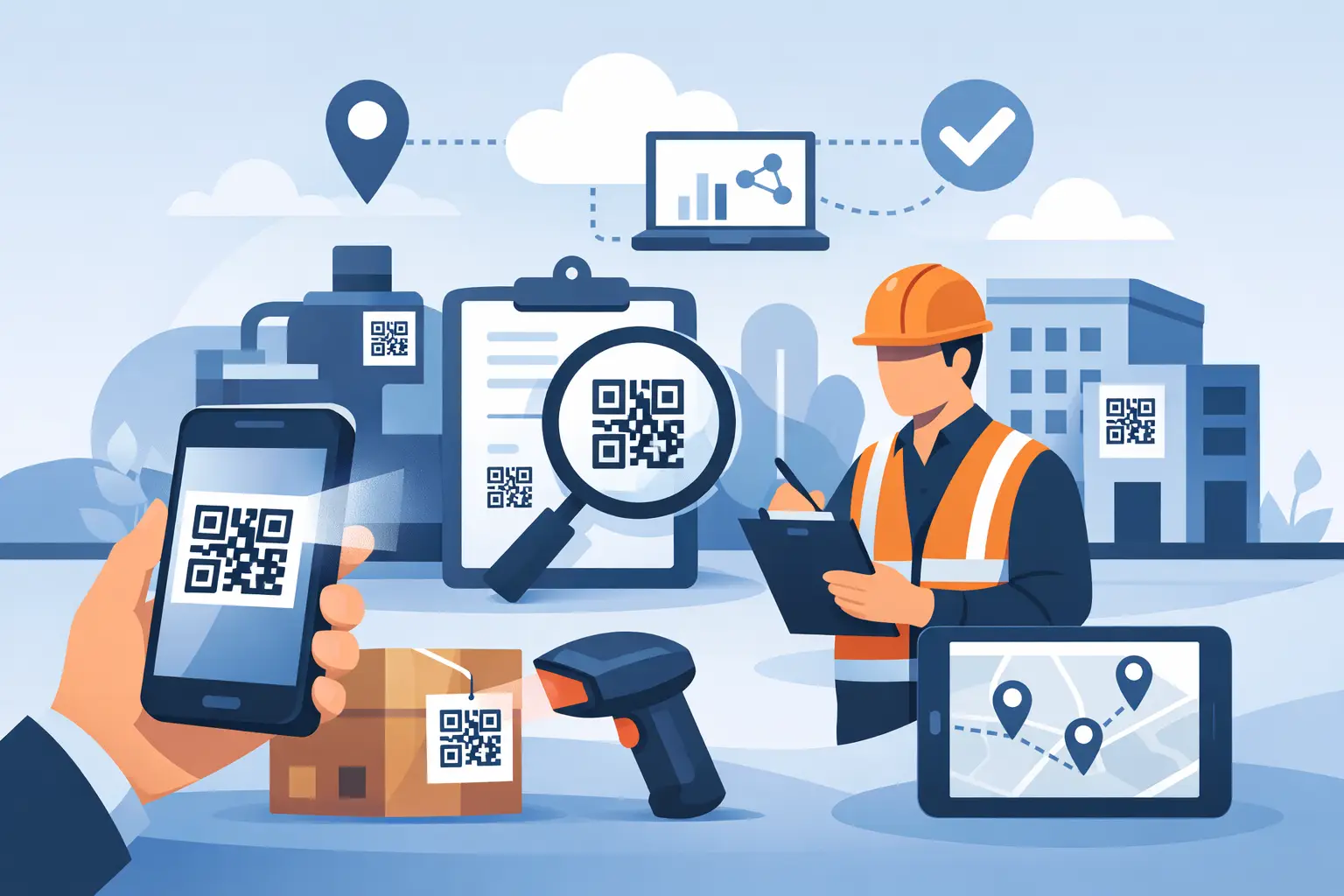
If your engineer is standing in a plant room trying to confirm whether pump P-104 was inspected six months ago or eighteen, the problem is not the engineer. It is the record trail. A QR asset tracking system gives inspection firms a faster way to identify the right asset on site, pull up its history, complete the inspection and leave behind a traceable record that stands up during audit.
For UK compliance-led businesses, that matters well beyond convenience. Whether you are managing LOLER examinations, fire door checks, fixed wire testing, petrol assets, pressure systems or legionella control points, the challenge is the same: every asset needs a clear identity, a current status and an inspection record that can be retrieved without argument. When that process depends on spreadsheets, faded labels and office follow-up, delays and risk build quickly.
What a QR asset tracking system actually does
At a basic level, the system assigns each asset a unique QR code. When an engineer scans that code with a mobile device, they can access the corresponding asset record immediately. That record might include location details, service history, defect history, previous certificates, photographs, notes, inspection frequencies and the current compliance status.
The real value is not the QR label itself. It is the connection between the physical asset and the operational system behind it. If the scan simply opens a static page or a disconnected register, it solves very little. For inspection firms, the asset record needs to link directly into workflow: planned inspections, engineer assignments, defect coding, evidence capture, client reporting and certificate production.
That is why the best fit is usually not a standalone tagging tool. It is a compliance and inspection platform with QR identification built into the wider process. In practice, that means the engineer scans once and continues the job from the same screen, rather than bouncing between apps, paper forms and office admin.
Why inspection firms adopt QR asset tracking systems
Most firms do not buy software because they want QR codes. They buy it because current operations are wasting time and creating exposure.
One common issue is asset ambiguity. A site may have ten extinguishers in one corridor, several similar air handling units on a roof, or multiple lifting accessories stored in the same bay. If labels are inconsistent or the register is poorly maintained, engineers spend billable time confirming what they are actually looking at. Worse, they may inspect the wrong item and leave the correct one unrecorded.
The second issue is broken continuity between field and office. Engineers complete inspections on paper or separate apps, the office rekeys data, certificates are delayed, and by the time a client queries an asset history the evidence is spread across folders and inboxes. A QR asset tracking system shortens that chain. Asset identification, inspection completion and evidence capture happen against the same live record.
The third issue is audit pressure. Clients, insurers and regulators do not care that the spreadsheet was on someone’s desktop or that the engineer had poor signal in the basement. They care whether you can prove what was inspected, when, by whom and with what outcome. Timestamped records, signatures, photos and linked inspection results make that proof easier to produce.
Where QR tracking works best - and where it needs care
QR codes are practical because they are cheap to produce, easy to deploy and simple for engineers to use. For many inspection environments, that is enough. Internal plant rooms, schools, hospitals, commercial estates and managed facilities are all good candidates, especially where assets are static and regularly accessed.
But there are trade-offs. Labels can degrade in high-heat, wet, chemical or abrasive environments. Outdoor assets may need more durable materials and better placement. Some sites also have poor connectivity, which means your mobile workflow must work offline and sync later. If it does not, the scan may identify the asset but the inspection still stalls.
There is also the discipline of maintaining the register. A QR code only works if the underlying asset data is accurate. If assets are moved, replaced, duplicated or renamed without controls, the code becomes another layer of confusion. The technology helps, but governance still matters.
The operational gains that matter
A well-implemented QR asset tracking system improves speed first. Engineers can locate the correct record on site in seconds, review prior defects before starting work and complete inspections without phoning the office for background. Across hundreds or thousands of assets, that time adds up quickly.
It also improves consistency. If each scan opens the correct inspection template for that asset type and discipline, reporting becomes more standardised. That is valuable for firms managing mixed service lines such as fire, electrical, HVAC and water hygiene, where process drift can creep in across teams.
There is a commercial benefit too. Faster asset identification and cleaner field data reduce admin overhead. Certificates can be issued sooner, queries can be answered faster and invoice support is easier to produce because the service record is already tied to the asset. For growing inspection firms, that operational control is often worth more than the scanning itself.
What to look for in a QR asset tracking system
The strongest systems are built around field reality, not just database logic. Start with mobile usability. Engineers need a fast scan, a clear asset view and inspection forms that make sense on a handset or tablet. If the app is awkward on site, adoption will suffer regardless of what the back office can do.
Next, look at asset structure. Can the system handle site, building, area and sub-location mapping? Can it separate client naming conventions from your own internal standards? These details matter when you are managing estates with repeated asset types across multiple locations.
Workflow integration is equally important. A QR scan should lead naturally into the scheduled job, relevant checklist, defect catalogue and evidence capture process. If you still need parallel systems for scheduling, certificates or invoicing support, the admin burden remains.
Compliance outputs should also be part of the decision. For regulated work, you need more than a nice asset register. You need inspection records, traceable changes, signatures, photographs, certificate generation and a clear audit trail. Built by engineers, for engineers, platforms such as CertFlow are stronger here because they connect QR-based asset identification to discipline-specific compliance workflows rather than treating tracking as a generic stock function.
Implementation is where success is won or lost
The temptation is to think the hard part is choosing the software. Usually, the harder part is setting up the asset data properly.
Start with naming rules and asset hierarchy. If one team calls an item AHU-01 and another calls it Roof Unit 1, the QR code will not fix the inconsistency. Define how assets will be named, grouped and located before labels are printed at scale.
Then consider the practical tagging exercise. Who will label the assets? During live inspections or as a separate mobilisation project? On some contracts, a phased approach works best: tag critical assets first, clean the register as you go, then expand. On others, especially where compliance deadlines are tight, a full-site capture may be justified.
Training should focus on workflow, not software menus. Engineers need to know what to do if they scan a missing asset, find a duplicate, discover a damaged label or inspect an asset that is not yet on the register. These exceptions are where weak processes show up.
Is QR the right choice for every asset estate?
Not always. If assets are very small, exposed to harsh conditions or likely to be replaced frequently, QR labels may require more upkeep than expected. In some environments, RFID or other identification methods may be considered. But for many UK inspection firms, QR remains the most practical balance of cost, simplicity and speed.
The key question is not whether QR is fashionable. It is whether it helps your engineers identify assets reliably and helps your business produce audit-ready records without extra administration. If the answer is yes, it is doing its job.
For inspection firms under pressure to standardise operations, reduce paperwork and prove compliance clearly, a QR asset tracking system is less about tagging and more about control. When every scan leads to the right asset, the right workflow and the right evidence trail, field teams move faster and the office stops chasing certainty after the fact. That is where the value sits.