
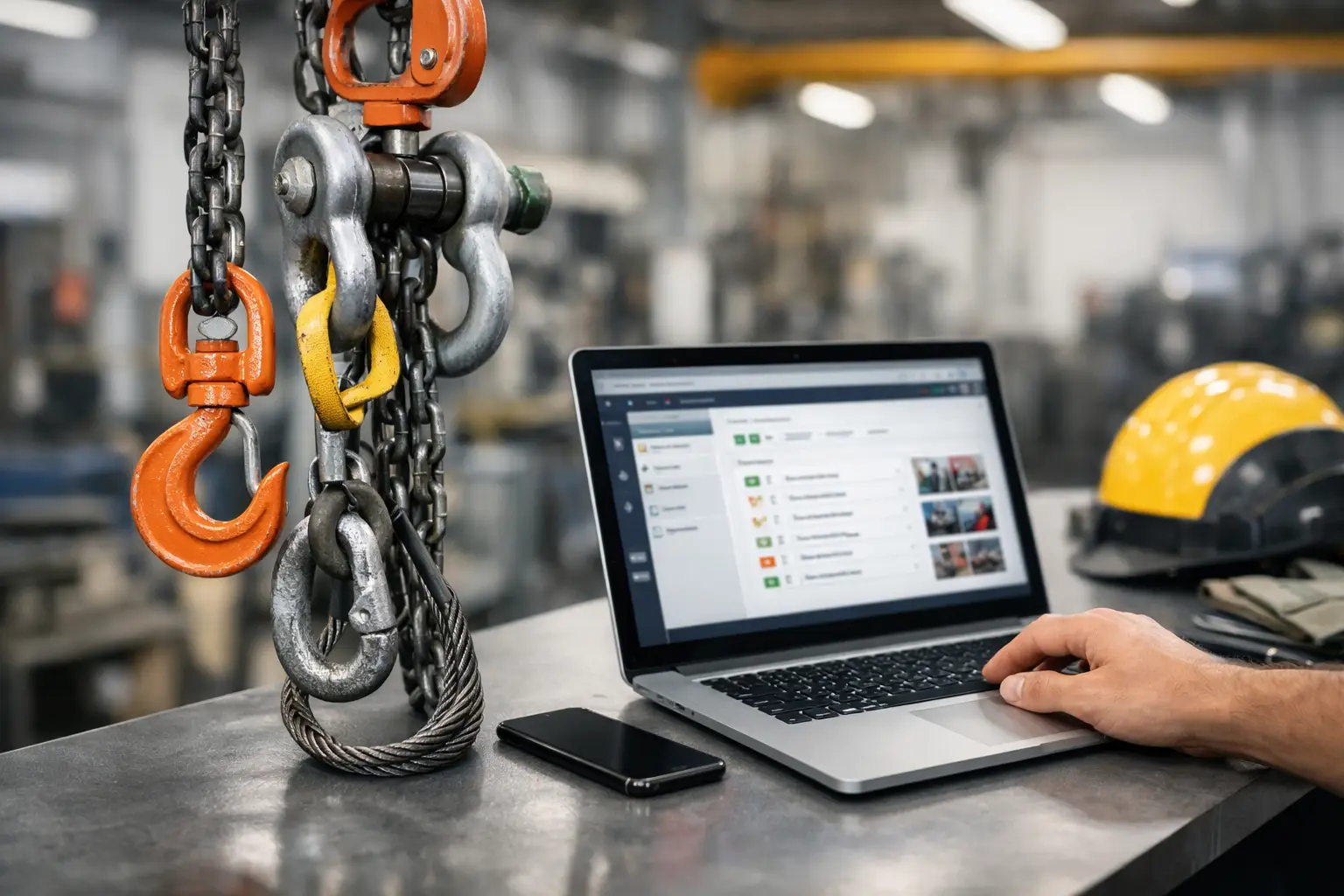
A missed thorough examination is rarely caused by one big failure. More often, it starts with a spreadsheet no one updated, a certificate sitting in someone’s van, or a site asset list that stopped matching reality months ago. That is exactly where LOLER management software earns its keep. For UK inspection firms managing lifting equipment across multiple clients, sites and inspection cycles, the job is not just to complete examinations. It is to prove control, produce evidence quickly and keep operations moving without creating more admin than the inspection itself.
LOLER work is unforgiving when records are fragmented. The Lifting Operations and Lifting Equipment Regulations 1998 place clear duties around thorough examination, defect reporting and safe use. In practice, that means inspection firms need accurate asset registers, repeatable workflows, traceable findings and certificates that can stand up to client scrutiny or an external audit. Paper forms and generic field-service systems can cover parts of that process, but they often leave gaps between the engineer’s visit and the office record. Those gaps are where delays, disputes and compliance risk start to build.
What LOLER management software should actually solve
The real test of LOLER management software is not whether it stores inspection records. Most systems can do that. The question is whether it reduces operational failure points across the full inspection cycle.
A useful platform should begin with the asset register. Every lifting asset needs a reliable identity, linked to site, client, equipment type, examination interval, previous findings and supporting evidence. If your engineers are arriving on site with outdated asset lists or creating duplicate records in the field, the software is already working against you. The register has to function as a live operational record, not a static database.
From there, scheduling matters just as much as recordkeeping. LOLER work is cyclical by nature, but cycles are not always simple. Different asset classes, different environments and different risk profiles can affect examination frequency. A system that only offers basic diary booking will not give operations teams enough control. You need visibility of upcoming examinations, overdue items, engineer allocation and site-level workload, without managing the whole thing through manual reminders and separate planning sheets.
Certificate production is another common pinch point. Many firms lose time not in the inspection itself, but in the lag between completion, review and issue. If engineers capture findings in one place and office teams build certificates somewhere else, turnaround slows down and quality becomes inconsistent. Good LOLER management software closes that gap by connecting field data directly to certificate outputs, defect records and client-ready documentation.
Why generic job software often falls short
A lot of software looks convincing in a demo because it handles jobs, forms and appointments. That does not make it fit for statutory inspection work. LOLER inspections are evidence-led and regulation-specific. They need more than task completion ticks.
Generic systems tend to struggle with discipline-specific workflows. They may let you create a form, but not a proper defect catalogue aligned to lifting equipment inspection activity. They may store attachments, but not present a clean audit trail showing who carried out the examination, when it happened, what was found and how the record was signed off. For office teams, that usually means workarounds. For engineers, it means more taps, more duplicated data entry and more room for inconsistency.
The trade-off is not always obvious at the start. A broad field-service product can appear cheaper or simpler to implement. But if it still leaves you maintaining separate asset schedules, manual certificate templates and disconnected evidence files, the admin burden simply moves rather than disappears. For inspection firms trying to scale, that becomes expensive very quickly.
The operational features that matter most
The strongest LOLER management software is built around inspection delivery rather than generic service management. In practice, that means engineers should be able to access site and asset information on mobile devices, work offline where signal is poor, capture defects in a structured way and obtain signatures before leaving site. That alone removes a lot of end-of-day admin.
Back in the office, operations and compliance teams need central visibility. They should be able to see inspection status, outstanding defects, certificate queues and approaching due dates without chasing engineers by phone or sorting through inboxes. Timestamps, user actions and document history should be automatic, because audit-ready records are not something you bolt on later.
Reporting also needs to be practical. Firms do not just need a list of completed jobs. They need to identify overdue examinations, common defect trends, engineer productivity, contract performance and client estate risk. Some businesses only need operational dashboards. Others want deeper management reporting to support contract reviews and growth decisions. The right system depends on your model, but baseline visibility should never be optional.
Choosing LOLER management software for your business model
Not every inspection firm needs the same setup. A specialist lifting inspection company with a stable regional client base will have different priorities from a multi-discipline compliance business covering fire, electrical, gas and water alongside LOLER. That affects what software makes sense.
If your business is purely LOLER-focused, you may prioritise speed in the field, structured examination templates and fast certificate turnaround. If you operate across several regulated disciplines, consolidation becomes more important. Running LOLER in one system and everything else in separate tools usually creates duplicated client records, fragmented scheduling and inconsistent reporting. The more services you deliver, the more valuable a unified operating system becomes.
There is also a people question. Some systems suit technically confident office teams but frustrate field engineers. Others are easy in the field but too limited for managers who need audit control and commercial oversight. Adoption matters as much as functionality. If engineers avoid using the mobile workflow properly, your records will still end up incomplete. If office staff cannot trust the outputs, they will rebuild everything manually.
Implementation is where the value is won or lost
Software selection gets the attention, but implementation is where firms either gain control or create another layer of complexity. Migrating LOLER records is not just a data exercise. It is a standardisation exercise.
Before onboarding, it is worth cleaning up asset naming, site structures, examination intervals, defect terminology and certificate formats. If you move inconsistent records into a new platform, you will simply digitise old problems. Good implementation should also define approval workflows, engineer responsibilities and how defects are escalated or closed out.
Training needs to reflect real roles. Engineers need to know how to complete examinations efficiently on mobile, capture evidence properly and handle exceptions on site. Operations teams need to understand scheduling logic, record review and document issue. Managers need reporting that supports decisions, not just data dumps. When each group sees the system through its own workflow, adoption is faster and resistance drops.
What better control looks like day to day
When LOLER management software is set up properly, the gains are operationally obvious. Engineers spend less time rewriting notes or sending photos after the visit. Office teams stop chasing missing details to issue certificates. Managers can see what has been completed, what is at risk and where workload is bottlenecked.
Clients notice the difference as well. They receive clearer documentation, faster turnaround and more consistent reporting across their estates. If they ask for historic records, defect evidence or site-level status, the information is available without a scramble through folders and email chains. That improves service perception, but it also strengthens retention. In compliance services, confidence in your recordkeeping is part of the product.
For growing firms, the commercial upside is straightforward. Standardised workflows reduce dependency on individual admin habits. Better scheduling improves engineer utilisation. Faster certificate issue supports cash flow where invoicing depends on completed documentation. And when audits or client reviews happen, evidence is already in the system rather than being assembled under pressure.
A platform such as CertFlow is designed around that reality - engineer-led workflows in the field, audit-ready records in the office and discipline-specific compliance structures built in from the start. That matters when your business is judged not only by the inspections you complete, but by the evidence you can produce afterwards.
The right software will not make poor inspection processes disappear on its own. But it will expose weak points, standardise delivery and give your team a system they can trust when the workload grows. For LOLER firms under pressure to move faster without compromising compliance, that is not a software upgrade. It is operational control.