
Know exactly which lifting item is due, where it is, and what happened last.
Build a searchable register for cranes, hoists, chains, web slings, shackles, eyebolts, beam clamps and other lifting accessories. Each item has its own identity and examination trail.
An asset list is only useful if each item can be found
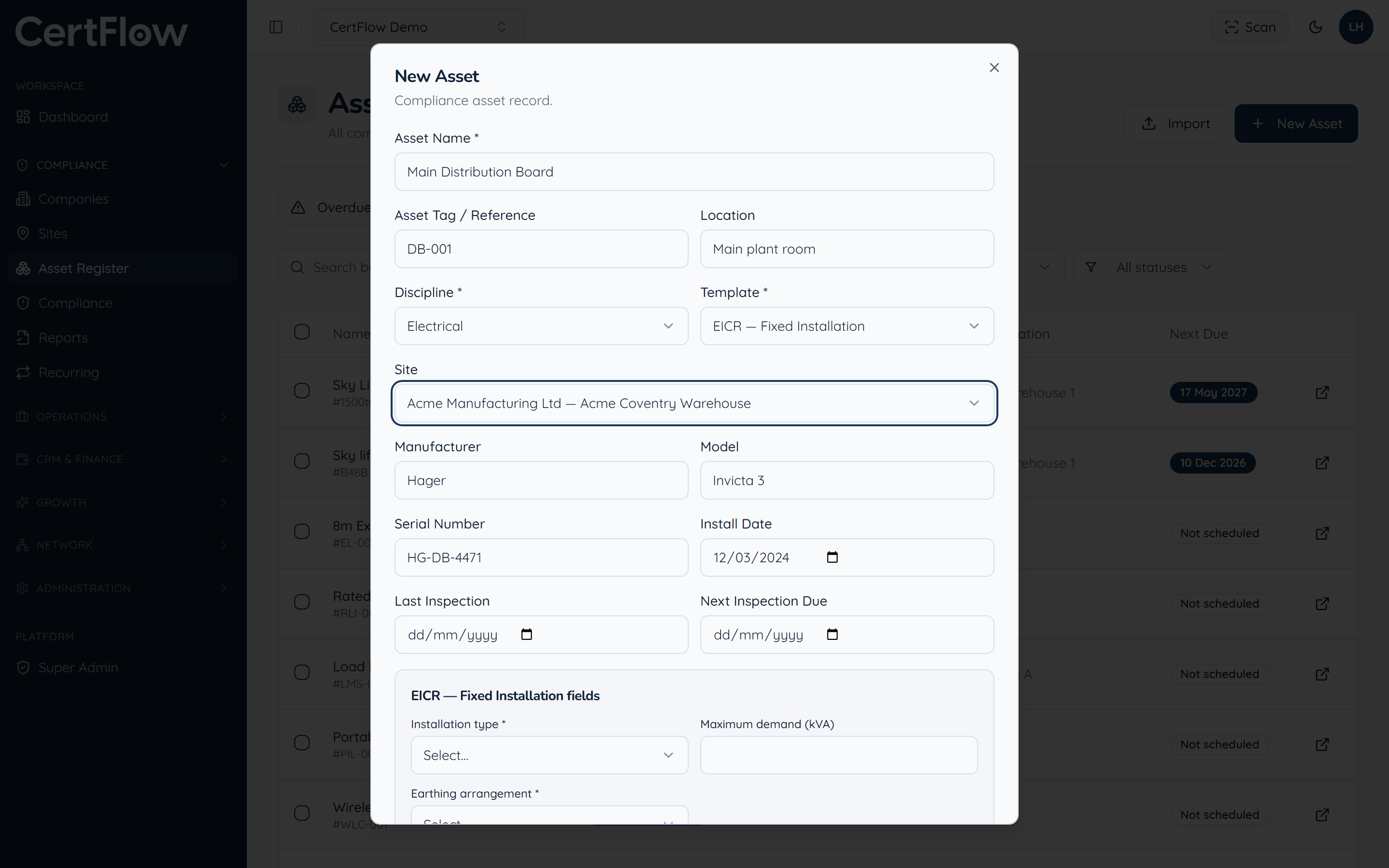
A generic row labelled “sling” is hard to reconcile with equipment on a site. Record a description, serial or other unique identifier, safe working load where applicable, client, site and precise location. Photographs help engineers check they are working on the intended item.
The register can be populated by import during onboarding or by adding items as work is found. Duplicate serial-number warnings help the team check a record before creating another one.
Keep the register useful after import
- 01
Group by real location
Arrange equipment under its client, site and sub-location so jobs match the way your team visits premises.
- 02
Set the relevant cycle
Keep an examination due date per item, with the regime or competent-person scheme that applies under LOLER 1998.
- 03
Open the item in the field
Search or scan its QR tag to check identity, previous reports and current status before the next examination.
- 04
Keep the result attached
Store observations, photographs, reports and certificates with the item instead of in a separate file folder.
Fields that help a lifting team identify an item
The exact particulars recorded depend on the equipment and applicable examination requirements. See LOLER 1998 and HSE guidance for the legal context.
- Equipment type and name
- Serial or unique identification number
- Safe working load where relevant
- Client, site and location
- Next due date and inspection status
- QR code and report history
LOLER rules and HSE guidance
Links to primary UK legislation and official regulator guidance. CertFlow is independent and not affiliated with these bodies.